
Portfolio
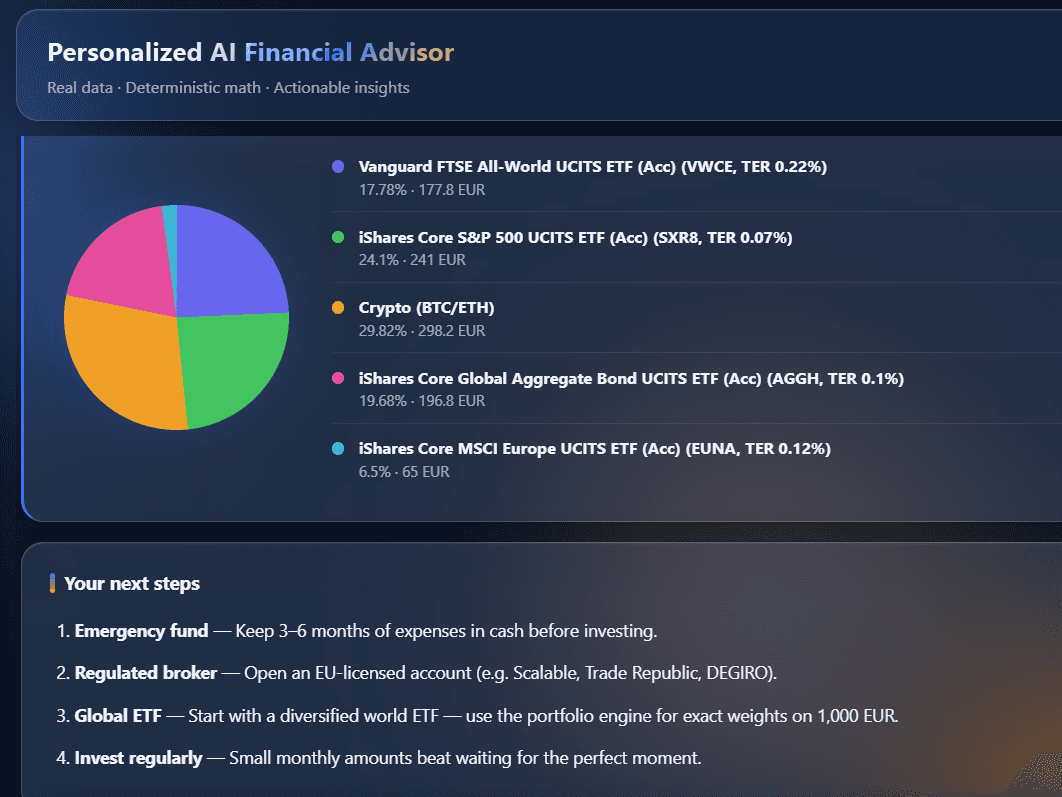
Allocation shaped by risk, goal, and horizon. The model narrates the sleeves the engine built.
Invest €2,000, low risk, 10 years
FinAI routes a question, runs deterministic engines on real data, and returns a card. The language model narrates that output. It does not invent prices, weights, or percentages.
Educational decision intelligence. FinAI is not regulated investment advice, and it is not a licensed advisor.
Macro, portfolio, or market data is decided before any sentence is written. “Is inflation bad for stocks?” does not get a portfolio template.
Allocation shaped by risk, goal, and horizon. The model narrates the sleeves the engine built.
Invest €2,000, low risk, 10 yearsA range of outcomes, not one guessed line.
Simulate my returns over 10 yearsInflation, rates, and markets as cause and effect, with regime context.
Is inflation bad for stocks?Quotes, volume, and sentiment from providers. The summary stays inside that data.
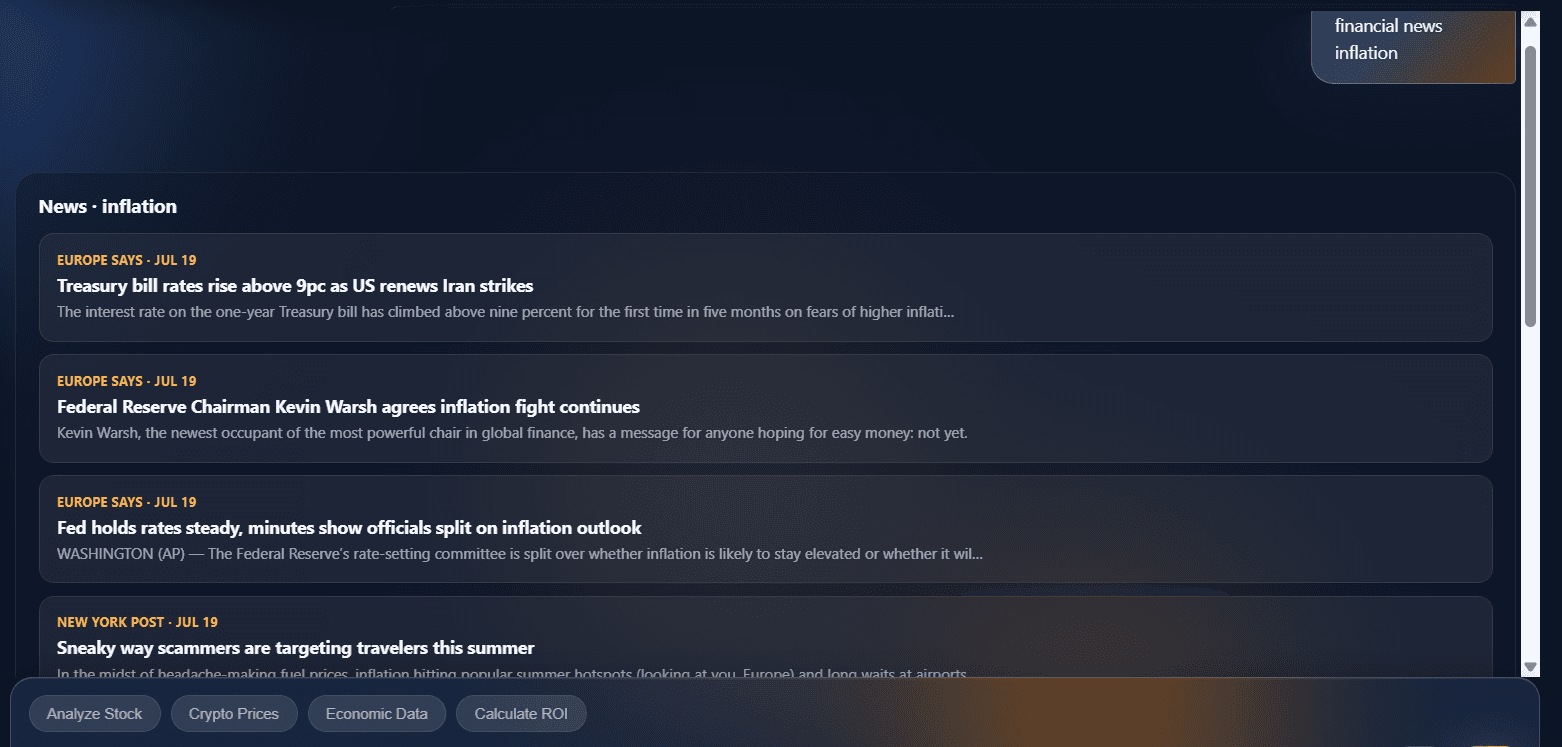
Latest news and sentimentTiming framed as a structured card, with the engine’s context attached.
Should I invest now?Compound interest and ROI from a calculation engine, not a formula the model invented.
8% compound growth on €5,000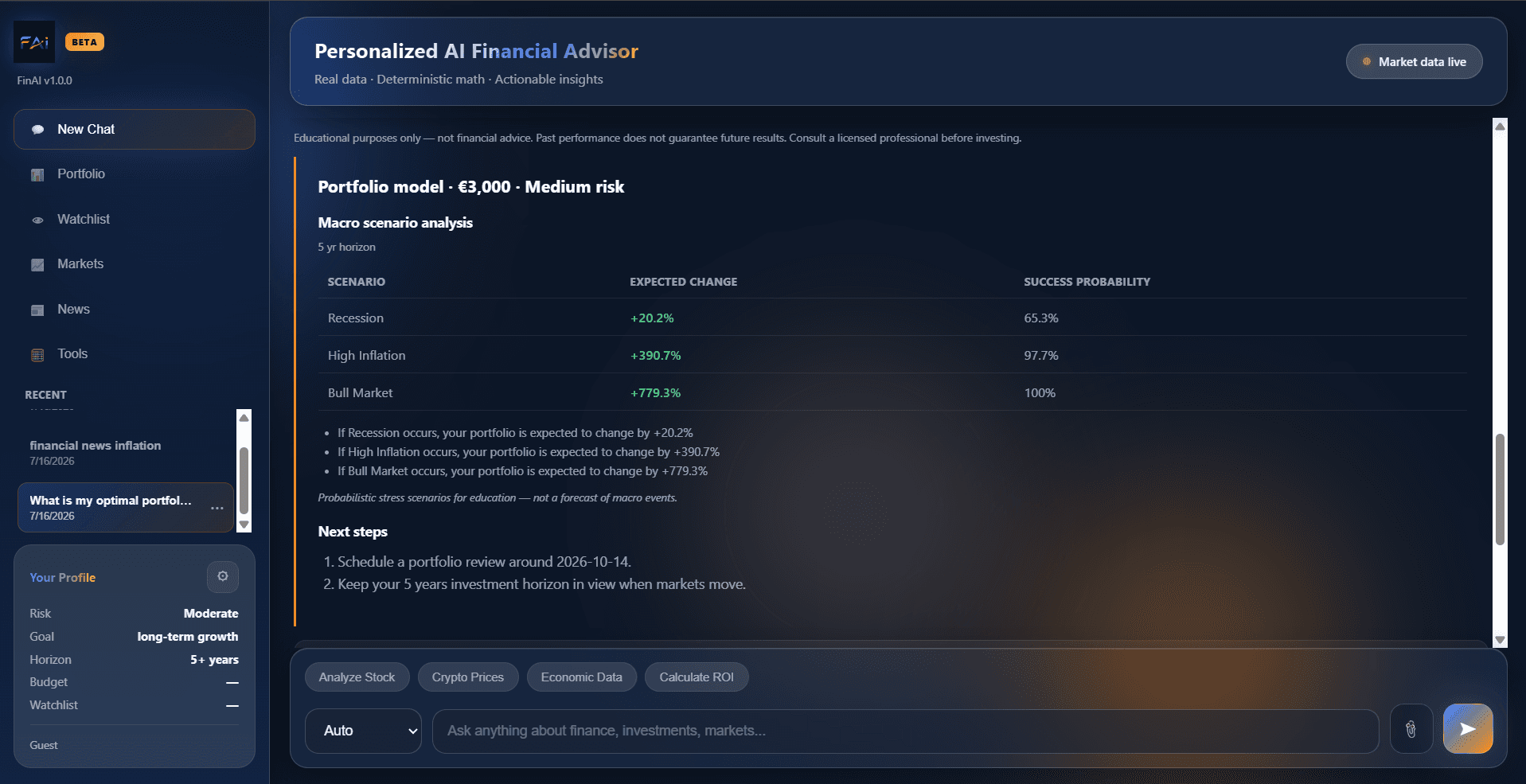
No. FinAI is educational decision intelligence only. It uses real data and deterministic engines, but does not provide regulated investment advice.
FinAI is built as decision intelligence, not a chatbot. It classifies your question, runs specialized engines on real market data, and returns structured cards. The model explains those results and does not invent prices.
Yes. FinAI routes macro questions such as inflation to the macro engine and risk questions to portfolio and Monte Carlo engines. You see the numbers first, then a plain-language explanation. It is educational, not regulated advice.
Anyone can try it at finai.wissenflow.com. Want FinAI for your institution, or have an idea for what the cards should do next? Talk to us. Play the concepts first in FinBild if the words are still abstract.